15 Minute Garlic Shrimp Pasta
I want to be honest with you about something: this recipe does not belong here, not really.
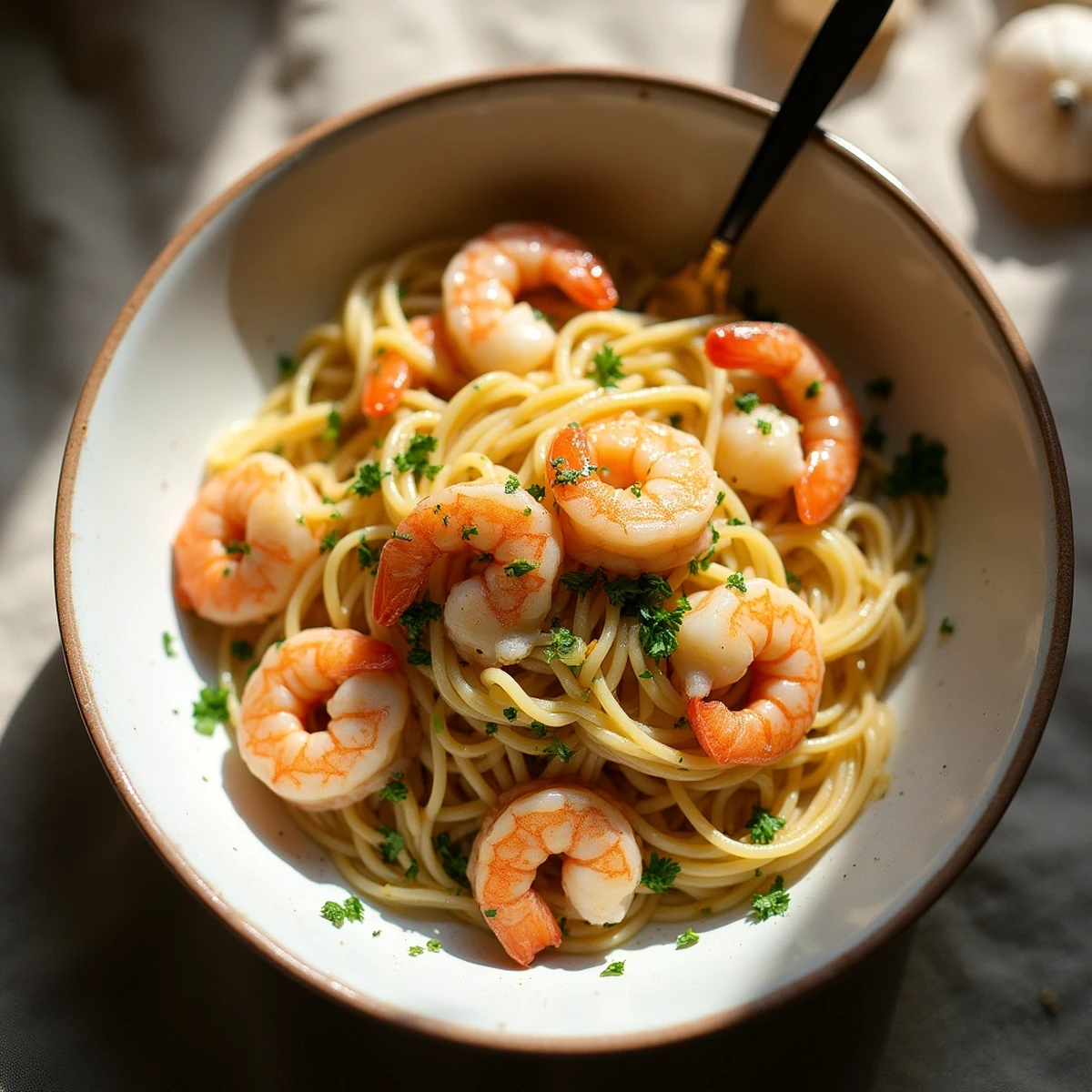
I want to be honest with you about something: this recipe does not belong here, not really. Whisk Whispers is a place for bread that takes three days and croissants that demand an unhurried week. Margot’s kitchen is a slow kitchen. And yet, here we are — because life is not always a slow kitchen, and I have never believed in pretending otherwise.
This garlic shrimp pasta arrived in my repertoire the summer Camille was visiting from Toronto with her partner, and they appeared on our doorstep a full two hours earlier than expected on a Tuesday evening. Thierry was still in the garden. I had bread dough proofing in the refrigerator and absolutely nothing else planned. I stood in the kitchen for one moment, took stock of what I had — a bag of shrimp in the freezer, spaghetti in the pantry, half a head of good garlic on the counter, a lemon, white wine, butter — and made something that Camille still asks me to make when she visits. ‘The pasta,’ she says. Just that. ‘Are you going to make the pasta?’
What I want you to understand about this dish is that it is not a shortcut. It is a different kind of recipe entirely — one that asks you to be fully present for fifteen minutes rather than intermittently attentive for three hours. The garlic must be sliced thin and coaxed slowly in butter until it is golden and fragrant but not bitter. The shrimp must be dry before they go into the pan, so they sear rather than steam. The pasta water — well-salted, starchy — is what brings the sauce together. These are small techniques, but they are the difference between something forgettable and something your daughter calls simply ’the pasta’ for the next four years.
Keep this recipe close for the evenings when the long bakes are not possible. It will not disappoint you.
Ingredients
- 400 grams spaghetti or linguine
- 450 grams large shrimp, peeled and deveined, tails on or off as you prefer
- 6 large cloves garlic, sliced thin — not minced, sliced
- 60 grams unsalted butter, divided
- 2 tablespoons good olive oil
- 120 ml dry white wine (something you would drink)
- 60 ml reserved pasta water, plus more as needed
- 1 lemon, zested and juiced
- 1/2 teaspoon red pepper flakes, or to taste
- Fine sea salt and freshly ground black pepper
- A generous handful of fresh flat-leaf parsley, roughly chopped
- Freshly grated Parmigiano-Reggiano, for serving — optional, though I rarely skip it
Instructions
-
- Bring a large pot of water to a full, rolling boil. Salt it generously — it should taste of the sea, which is not a poetic suggestion but a practical one. Add the pasta and cook until just shy of al dente, about one minute less than the package directs. Before you drain it, reserve at least 120 ml of the cooking water in a small bowl or measuring cup. This starchy liquid is what will become your sauce.
-
- While the pasta cooks, prepare your shrimp. Pat them thoroughly dry with paper towels — this matters, and I will explain why in the tips. Season them lightly with fine sea salt and black pepper on both sides.
-
- Heat a large, wide skillet — something that gives the shrimp room — over medium-high heat. Add the olive oil and 30 grams of the butter. When the butter has melted and the foam begins to subside, add the shrimp in a single layer. Do not crowd the pan; work in two batches if necessary. Cook for 90 seconds per side, until the shrimp are pink and just opaque at the center. Remove them to a plate and set aside. They will finish in the sauce.
-
- Reduce the heat to medium. Add the remaining 30 grams of butter to the same pan. When it melts, add the sliced garlic and red pepper flakes. Cook slowly, stirring occasionally, for two to three minutes. The garlic should turn pale gold at the edges and smell sweet and nutty — watch it carefully here. Burnt garlic will make the whole dish bitter, and there is no recovering from it.
-
- Pour in the white wine. It will hiss and steam. Let it reduce by half, about one minute, scraping up any golden bits from the bottom of the pan.
-
- Add 60 ml of the reserved pasta water and the lemon juice. Stir to combine. The sauce will look loose — this is correct.
-
- Add the drained pasta directly to the pan. Toss to coat, adding more pasta water a splash at a time until the sauce clings to the noodles in a way that looks glossy rather than soupy. The starch in the pasta water will help everything emulsify. Add the shrimp back to the pan and toss gently to warm them through — thirty seconds is enough.
-
- Remove the pan from the heat. Add the lemon zest and the chopped parsley. Taste the pasta and adjust the salt. Serve immediately, with Parmigiano-Reggiano grated over the top if you like, and more black pepper, and perhaps a little more lemon if the dish wants brightness.
Nutrition
Tips
A few things I have learned from making this many times, sometimes in a hurry and sometimes not:
1. Dry your shrimp before they go near the pan. This is the step most people skip, and it is the reason most home-cooked shrimp steam rather than sear. Moisture is the enemy of a good crust. Pat them with paper towels until they feel almost tacky to the touch. A dry shrimp hitting a hot buttered pan will turn golden and tender in minutes. A wet shrimp will simply stew in its own liquid, and you will lose the texture that makes this dish satisfying.
2. Slice the garlic, do not mince it. Minced garlic burns quickly and unevenly. Thin slices cook at the same rate, turn golden together, and have a gentler, more rounded flavor in the finished dish. Memere Colette always sliced her garlic for the pan, though she would not have known to explain why — she simply knew it was right.
3. Save more pasta water than you think you need. I always scoop out a full cup, even though I rarely use all of it. The starch content of pasta water changes the texture of a sauce in a way that plain water cannot replicate — it gives the sauce body and helps the butter and oil bind together into something that coats every strand of pasta. If you find your sauce has become too thick as it sits on the plate, a small splash of pasta water stirred in will bring it back. Keep the cup nearby until the very end.